Bedding · Materials & Craft
Inside a Traditional Mattress: How Vispring Uses Natural Fillings
A traditional mattress is not simply a spring unit wrapped in fabric. Its layers of fibers and other materials help shape the feel of the surface, influence how it responds to pressure, and contribute to the way it manages warmth and moisture. Horsehair is one historic filling in this layered tradition—but no single ingredient can promise comfort on its own.
Published October 31, 2026
The word “mattress” often brings to mind a single object: a rectangle on a bed frame, selected by firmness and size. Traditional construction asks us to look closer. Beneath the ticking—the outer fabric—may be a carefully arranged combination of springs, padding, upholstery fibers, and stitching. Each layer has a role, and the way those layers work together matters at least as much as the name of any one material.
Horsehair has a particularly long association with mattresses and upholstery. It appears in accounts of older bedding not because it is magical, but because its physical characteristics made it useful: it can be formed into resilient, springy batting, and its structure can leave room for air to move through a filling. Wool, cotton, and other fibers have also been used in traditional bedding, each bringing different characteristics and practical considerations.
Vispring offers a useful point of reference for exploring the vocabulary of traditional mattress making. But a brand name is not a construction specification. Materials and arrangements can differ by model, and descriptions should be checked against the exact mattress under consideration. The more useful question is not simply, “Does it contain horsehair?” It is: “Where is each material placed, what is it intended to do, and how does the whole mattress feel in use?”
A mattress is a layered system
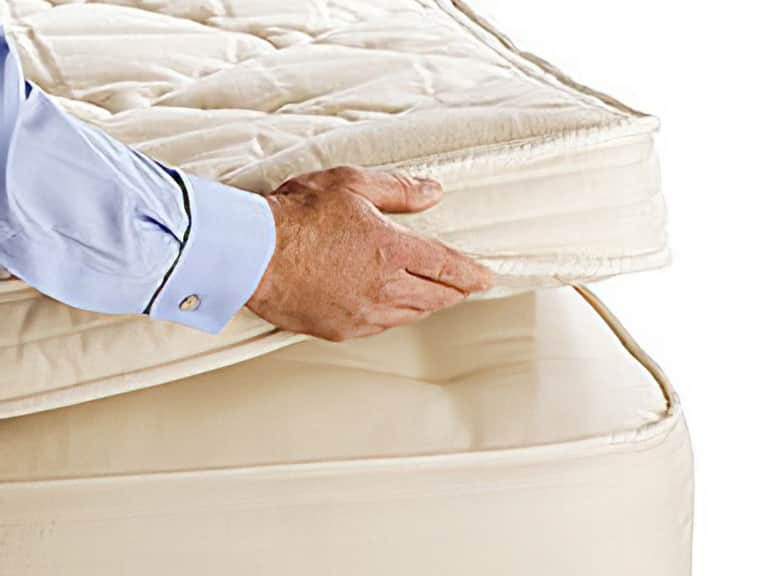
In a traditional design, the sleep surface is built from components that interact. The outer cover protects the interior and gives the mattress its finished appearance. Beneath it, upholstery layers can soften the initial contact, distribute pressure, or add a degree of spring and structure. A support core—often a spring system in this style of mattress—provides the deeper response beneath the fillings.
The order, thickness, density, and fastening of those layers change the experience. A resilient fiber placed close to the surface may create a different first impression from the same fiber used deeper in the upholstery. A generous comfort layer can feel more cushioned, while a firmer or thinner arrangement may feel more direct. Meanwhile, the support system and the mattress’s overall geometry influence how the body is held underneath that surface.
This is why a material list, although helpful, is incomplete. Two mattresses may both mention wool or horsehair but differ in fiber preparation, quantity, layering, spring design, quilting, and firmness. Even terms such as “natural” and “traditional” describe broad categories rather than a guaranteed result. They do not, by themselves, tell a sleeper whether the bed will feel soft, firm, cool, supportive, or suitable for a particular body.
When reading a product specification, try to find the construction story as well as the ingredient list. Look for the location of each filling, whether the mattress has distinct comfort and support zones, what kind of core it uses, and whether the layers are secured through tufting or another method. If a description leaves those details unclear, the absence of information is itself worth noting.
Horsehair: an old material with specific properties
Horsehair is the coarse or fine hair collected from horses and prepared for use in textiles and upholstery. In mattress making, it is generally discussed as a filling, not as the mattress’s entire structure. Its spring-like character can help a pad recover after compression, while the spaces among fibers can allow air to circulate through the material. These qualities help explain its place in historical bedding and furniture.
“Horsehair,” however, does not identify one uniform substance. Hair can vary in length, texture, and preparation. The source, cleaning, processing, and method of assembly all affect the finished filling. A mattress description that uses the word without further detail provides a clue, not a complete account of quality or performance.
Nor should breathability be mistaken for a promise that a sleeper will never feel warm. The temperature of a bed depends on the wider system: the mattress, sheets, duvet, room conditions, the sleeper, and how much heat and moisture are produced overnight. A fiber’s structure may contribute to airflow, but it cannot regulate every part of that environment by itself.
There is also a practical distinction between historical interest and present-day performance. Antique mattresses may contain hair fillings, but their condition depends on decades of use, storage, repairs, and exposure to moisture or pests. A period object is not automatically a model for modern comfort, and a modern mattress that uses an old material is not necessarily built like an antique. Construction methods evolve; the material name alone cannot bridge that gap.
Wool, cotton, and the work of comparison
Wool is another familiar natural filling. It is used in bedding for its soft, compressible character and its ability to absorb moisture before it feels damp. In a mattress, wool may appear as a comfort layer, a quilting component, or part of a broader combination of fibers. Its effect depends on how much is used and where it sits in the build.
Cotton can also serve as a filling or upholstery fiber. Its feel and behavior vary with the preparation and density of the batting. Linen and other plant fibers may appear in covers, stitching, or upholstery contexts, but their presence in a product should be verified rather than assumed. The label “natural fillings” can cover several materials with quite different structures and care needs.
Comparing materials is useful, provided it does not become a contest with a single winner. Horsehair is often valued for resilience and an open structure; wool is often associated with moisture management and insulation; cotton may provide a familiar, comparatively firm padding when densely assembled. These are general descriptions, not guarantees for every mattress. Fiber quality, construction, and the sleeper’s preferences can change the outcome.
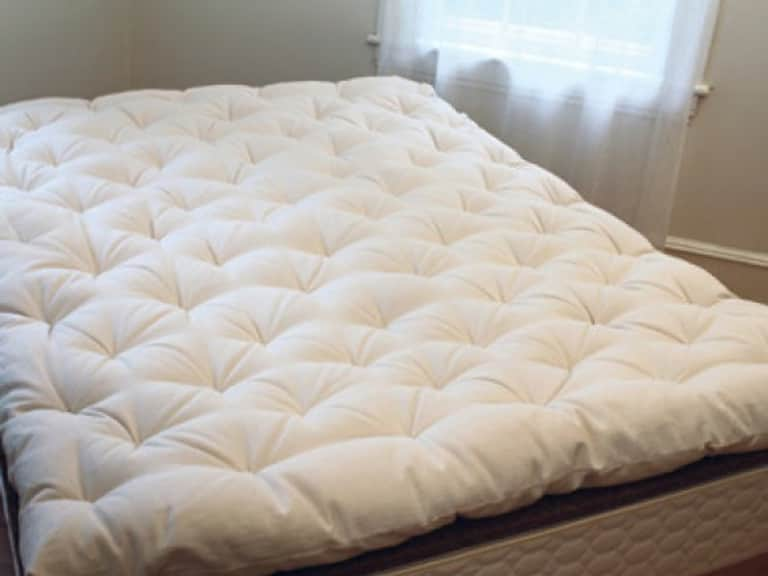
For a separate example of a mattress built around wool rather than horsehair, the Savvy Rest Pastoral Wool Mattress is described as a 4.5-inch, latex-free mattress with organic wool batting and a tufted organic cotton cover. That makes it a useful illustration of how a natural filling can form the central story of a mattress, but it is not a substitute for examining the specifications of a Vispring model or any other individual design.
What “layered fillings” can change
Layering matters because different parts of the body press into a mattress with different force, and sleepers move through the night. A surface layer can influence the first sense of softness; deeper padding can change how pressure is distributed; the core determines much of the underlying support. The transition between these elements can be as important as the elements themselves.
Resilience is one consideration. A filling that springs back after compression may help a surface retain a sense of liveliness, but resilience is not identical to firmness. A mattress can feel yielding at first and still offer strong support below; another can feel immediately firm without necessarily being better aligned to a particular sleeper’s needs.
Air movement is another consideration. Fibrous layers may contain small spaces that permit circulation, but the cover, quilting, and total depth of the mattress also shape airflow. Likewise, moisture behavior belongs to the whole bedding system. Sheets, protectors, room humidity, and ventilation can all affect whether a bed feels dry and comfortable.
Finally, layered construction affects maintenance and longevity. Some mattresses are designed to be turned or rotated; others are not. A one-sided design should not be flipped simply because older mattresses often were. Manufacturer care instructions take precedence. Tufting, stitching, and upholstery density may help hold layers in place, but no construction method makes a mattress immune to wear.
Using Vispring as a reference—not a shortcut
Vispring is associated with traditionally made, spring-based mattresses and natural-fiber upholstery. That makes the name relevant to a discussion of craft and materials. Yet a brand-wide description should never be treated as a precise description of every product it offers. A particular model may use a different mixture or arrangement of fillings from another, and specifications may change over time.
For any Vispring mattress, start with the model’s current documentation. Identify the support system, the listed fillings, and any stated details about the composition or placement of those fillings. Check whether descriptions distinguish between the upholstery layers and the spring unit. If the product information uses broad phrases such as “natural materials,” look for a more detailed specification before drawing conclusions.
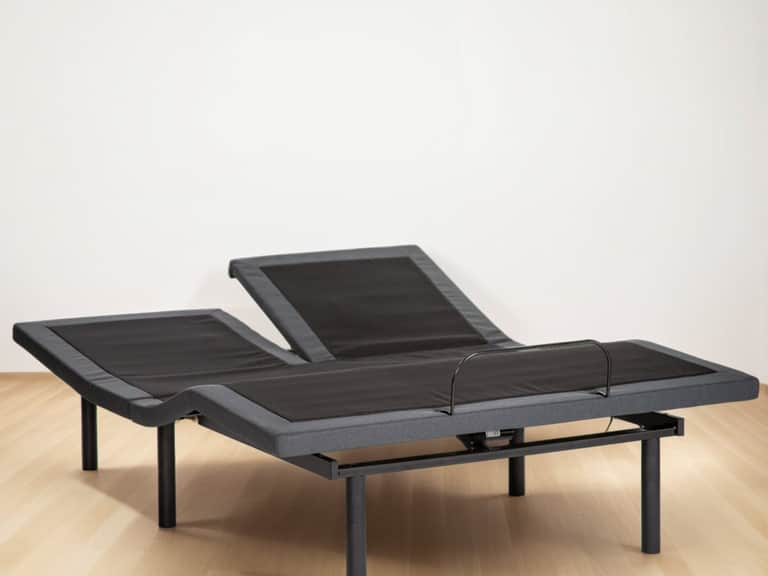
Ask how the mattress is intended to be maintained. Is it single-sided or double-sided? Should it be rotated, and at what interval? Are there restrictions on the bed base? What care is recommended for the cover? These are practical questions, not fine print: the wrong base or an unsuitable care routine may affect how the mattress performs over time.
Where the answer matters—such as the exact source of a fiber, a certification, or the presence of a particular material—seek product-specific confirmation. Avoid inferring certification from a natural-fiber claim or inferring a health benefit from a material name. A careful buyer distinguishes verifiable construction details from promotional language.
Comfort is personal; performance is contextual
A mattress cannot be judged by its filling alone because comfort is an interaction between a sleeper and a complete sleep system. Body shape, weight, sleeping position, mobility, temperature preference, and sensitivity to pressure all play a part. The bed base and the sheets add further variables. A material that feels pleasant to one person may not suit another.
Testing, when available, is more informative than relying on an adjective such as “luxurious.” Lie in the position you usually sleep in and give the surface time to settle. Notice whether pressure builds around the shoulders or hips, whether the lower back feels supported, and whether changing position is easy. Couples may also need to consider whether movement on one side is felt on the other.
Firmness ratings can help organize choices, but they are not universal measurements across manufacturers. A “medium” from one company may not feel like a “medium” from another. The same is true of claims about durability, cooling, or support: they need context, construction details, and ideally a clear basis for comparison.
For people with allergies, asthma, or other health concerns, natural materials should not be assumed to eliminate symptoms. Sensitivities differ, and covers, finishes, dust, and household conditions can matter. Anyone making a purchase for a medical reason should consult an appropriate health professional and review the exact materials and care guidance rather than relying on broad claims.
Care and preservation: less drama, more consistency
Traditional materials reward sensible care, not elaborate rituals. Use a supportive base that meets the mattress maker’s requirements, protect the surface with bedding suited to the product, and keep the room reasonably ventilated. Follow the specified rotation or turning schedule, if one is provided. A mattress that is designed to remain one-sided should not be flipped.
Spills and stains call for caution. Avoid soaking a mattress or applying cleaners without checking the manufacturer’s instructions; moisture can be difficult to remove from dense layers. A removable, washable cover or protector may help limit routine soiling, but its fit and breathability should be appropriate for the mattress. Sunlight and airing may be suitable in some circumstances, but direct heat or prolonged exposure can damage certain fabrics and materials.
For an antique mattress or a piece of upholstered furniture with horsehair, preservation is a different task from household cleaning. Dust, deterioration, insect activity, and historic construction can require specialist assessment. Do not open a valuable object or replace original material on the assumption that its contents are ordinary stuffing. Museums, conservation organizations, or qualified textile and upholstery conservators can be better sources of guidance for significant pieces.
A practical checklist for reading a mattress specification
When comparing a traditional mattress, use the following questions to turn a list of materials into a clearer picture of the object:
- What supports the body? Identify the core or spring system separately from the upholstery fillings.
- Which fillings are present? Look for specific materials, not only a broad “natural” label.
- Where are they placed? A description of the layer sequence is more useful than an uncontextualized list.
- How is the mattress assembled? Check details such as quilting, tufting, and whether the mattress is single- or double-sided.
- What is known about sourcing? Ask for documented details when origin, processing, or certification matters to you.
- What care does it require? Confirm turning, rotation, cleaning, and base recommendations.
- Can you assess the feel? If possible, test the mattress or understand the maker’s trial and return terms before purchase.
This approach avoids the trap of treating a single fiber as a verdict. Horsehair can be a historically significant and technically interesting filling. Wool and cotton can contribute their own qualities. But material names become meaningful only when joined to construction details and a real assessment of comfort.
The enduring appeal of an old idea
Traditional mattress making draws attention to something modern product language can obscure: a bed is assembled, not conjured. Its performance emerges from decisions about fibers, springs, layers, covers, and craft. Horsehair remains part of that story because its structure made it useful in upholstery and bedding, not because history has certified it as the right answer for every sleeper.
Vispring is a point of entry into this tradition, not a reason to skip the details. Examine the model, read its specification, and separate general material properties from claims that require product-specific evidence. The most helpful question is not whether a mattress sounds old-fashioned or natural. It is whether its documented construction, care requirements, and tested feel make sense for the person who will sleep on it.
Frequently asked questions
Is horsehair still used in mattresses?
Horsehair remains associated with traditional upholstery and some mattress constructions. Whether a particular modern model contains it must be confirmed from that model’s current specifications.
Does horsehair make a mattress cooler?
Its fibrous structure may allow air movement, but a mattress’s temperature depends on its full construction and the surrounding sleep environment. Horsehair alone cannot guarantee a cooler night.
Are natural fillings always more durable?
No material category guarantees a particular lifespan. Fiber quality, construction, use, support, and care all influence how a mattress wears.
Can I flip a traditional mattress?
Only if the manufacturer identifies it as double-sided and recommends flipping. Follow the care instructions for the exact model; some traditional-looking mattresses are designed for use on one side only.